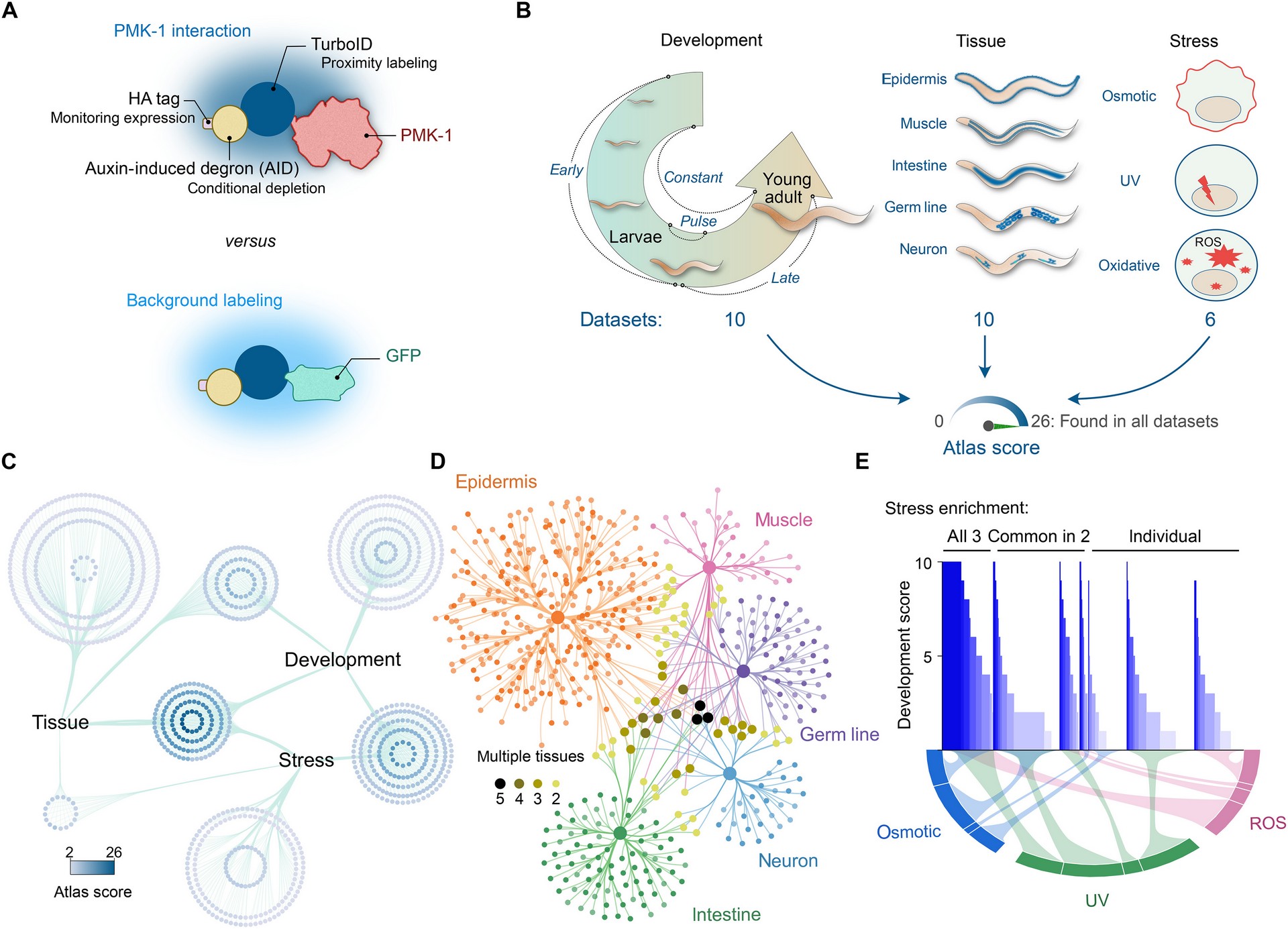
The mitogen-activated protein kinase (MAPK) p38 contributes to developmental and homeostatic processes and plays a key role in stress adaptation. Using in vivo proximity labeling, Yuan et al. investigated signaling networks of the Caenorhabditis elegans p38 homolog PMK-1 during development, in specific tissues, and in response to various stresses. Computational and functional analyses revealed factors that interacted with PMK-1 constitutively or dynamically in a context-specific manner and contributed to phenotypic plasticity and survival. The data offer a window into the functions of p38 in generating the phenotypic plasticity that enables organisms to adapt to changing environmental conditions. —Annalisa M. VanHook